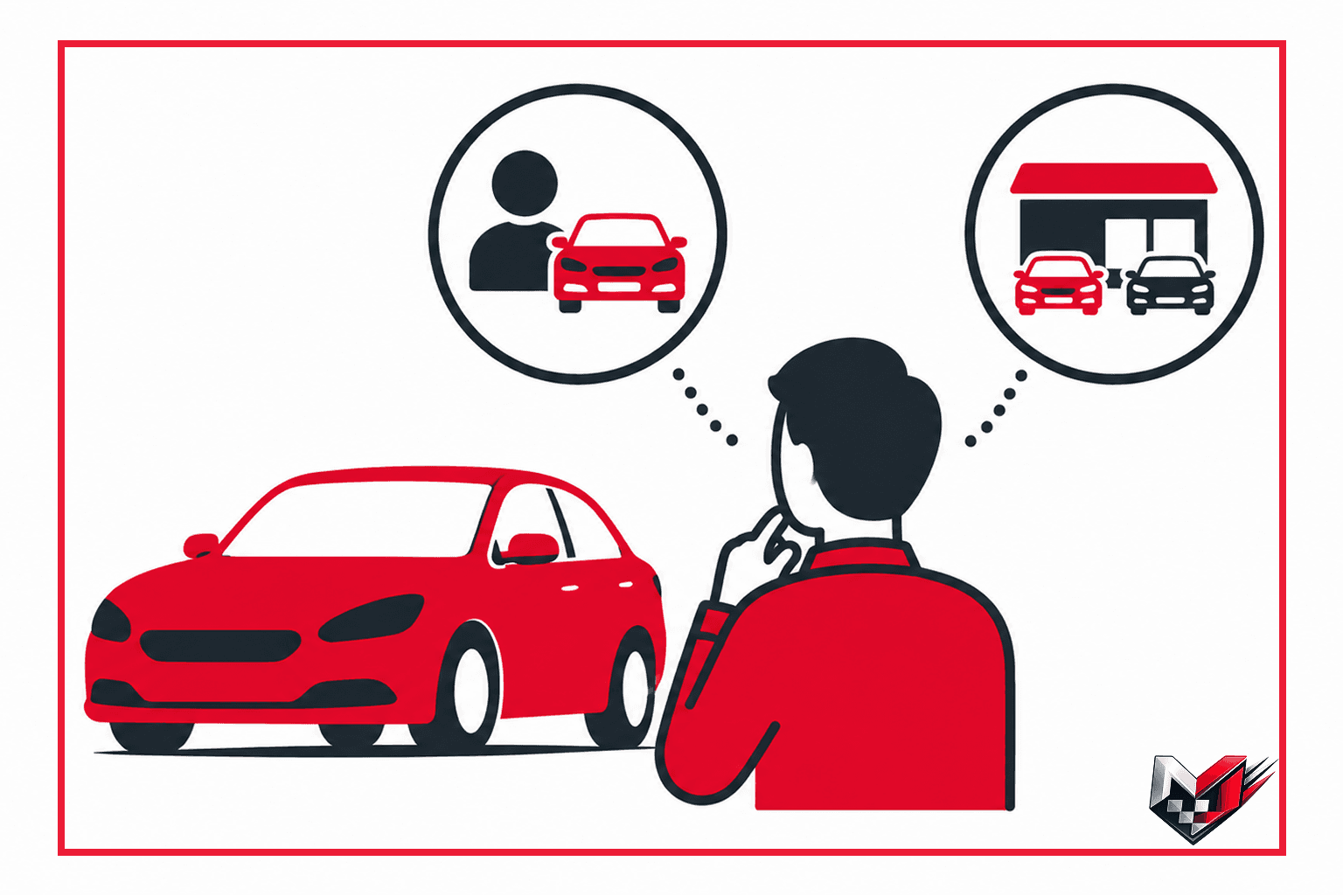
Buying from a Dealership vs. Private Seller: Which Is Right for You?
One of the first decisions you'll make when buying a used car is where to buy it from: a dealership or a private seller. Both have real advantages, and the right choice often comes down to what you value most: price, safety, or convenience. Here's an honest comparison.
1. Price
Private sellers often list cars slightly cheaper than dealerships, since there's no overhead or markup built in. But the gap is usually smaller than people expect once you account for the extras a dealership includes, like a roadworthy certificate, a service check, or a warranty. A "cheaper" private sale can end up costing more once you add these on yourself.
2. Vehicle History and Condition Checks
- Dealerships generally inspect and prepare a car before listing it, and many offer a condition report or checklist upfront.
- Private sellers may be honest and thorough, but there's no standard process. You're relying entirely on their word and your own inspection.
If you're not confident inspecting a car yourself, this is often where a dealership offers real peace of mind.
3. Paperwork and Roadworthy Certificate
In South Africa, a valid Roadworthy Certificate (RWC) is needed to register the car in your name.
- Dealerships typically handle the RWC and registration transfer as part of the sale.
- With a private sale, you'll need to confirm who's responsible for the RWC, and you may need to arrange the registration transfer yourself at a licensing department.
4. Warranty and After-Sale Support
- Many dealerships offer some form of warranty, even on used cars, or can point you to warranty-eligible stock.
- Private sales are almost always sold "voetstoots" (as-is), with no recourse if something goes wrong after the sale.
If something breaks down a week after purchase, a dealership relationship gives you somewhere to turn. A private sale generally doesn't.
5. Trust and Safety
- Buying from a registered dealership means dealing with a business that has a reputation to protect, and is easier to hold accountable if something's wrong.
- Private sales require more caution: meeting strangers, carrying cash, and verifying ownership documents yourself.
6. Financing
Dealerships are usually set up to arrange vehicle finance on the spot, working directly with banks and finance houses. Financing a private purchase is possible, but often more paperwork and coordination falls on you.
7. Trade-Ins
If you're selling your current car as part of the deal, a dealership can usually take it as a trade-in on the spot. Private sellers obviously can't offer this, meaning you'd need to sell your old car separately first.
So Which Should You Choose?
If price is your only priority and you're confident inspecting a car and handling paperwork yourself, a private sale can work out. If you value a smoother process, some form of warranty, help with financing, and less risk overall, a dealership is generally the safer and more convenient route, especially for a first-time or cautious buyer.
Ready to browse? Explore verified dealership listings on MotorGrid and see real inventory from dealers across South Africa.